

The January Selected Poet is
Jack Veasey
Please feel free to email Jack at: bluebard@comcast.net
THE GREEN MAN
Referring to the familiar image of a man’s face, often with leaves and vines
In his hair and beard, sometimes horned, that appears carved on tree-trunks and
Ornamenting architecture throughout the British Isles.
An image in the ornate metal grate
That guards the cellar window from kicked stones
Betrays a man’s face, gazing as he waits,
Hidden among the leaves, silent; alone,
Where no one notices, presumes to judge
His motives. He remains mysterious.
From this safe vantage point, he’ll never budge;
Frozen forever in his role as just
Observer—conscious, but uncivilized.
Amid his camouflage of vegetation
He can be a face with eyes
That don’t betray his quiet cogitation.
Society thinks he’s been left behind.
He smiles and keeps the secrets of his mind.
FRANKENSTEIN MEETS THE POET
You feel ill at ease in a crowd.
—from the epigraph series “Things I know About You,” by Dan Waber
“Friend.”
—the word Frankenstein’s monster repeats to the blind man who, alone, is not afraid of him, in James Whale’s film “Frankenstein.”
Some things could be true of anybody,
Anytime. If the crowd is waving torches, crying
For the monster’s blood,
Because he’s big and clumsy
And misshapen
And not quite
Articulate—yes,
I’d be ill at ease.
The monster’s claim upon my sympathies
Might be much bigger
Than the crowd’s.
But this is not
An old movie
On black and white TV.
Monsters these days have mastered
More respectable approaches;
They understand
What sells to angry crowds.
That’s why they so often
Run for office.
And the blind these days
Believe in what they cannot see
Yet wouldn’t trust
A stranger, more frightened of another
Who seems vulnerable
Than of
Mere monstrousness.
The evening news is full of
Rumored horrors
Far more frightening
Than even their own
Dark deformity.
They grasp at Gods
That make mad promises.
They crave
A magic cure,
A myth come true
That they can call
“A miracle.”
Any dissonant opinion
Would disturb them.
They prefer their strangers
Faceless, out of reach, no puzzling features
They must grope,
Their fingers
Tasting food
For the imagination—
Foreign,
Indigestible.
SMILE OF THE WOLF
No, his smile is not
Malevolent.
Yes, the wolf eats flesh,
But so do we.
At least the wolf
Faces his prey
While it still lives.
At least the wolf obeys
Only his nature, not
A gnawing greed
For profit.
Happy from lying in the sun
With cubs and mate,
his face reflects
that happiness. Dreaming,
he may even
wag his tail.
His mouth curls up its corners;
His lips do not roll back
To bare his teeth.
His pack and family
Are safe—
And so are we, unless
We violate his space.
Settle
For only dreams of him,
Distant admirer
Of his beauty;
These, at least,
Are your own
Territory. Stay back
Where his howl
Is pure sweet music.
A 2010 nominee for a Pushcart Prize, Jack Veasey is a Philadelphia native who has been living in Hummelstown, Pennsylvania for over twenty years. He is the author of ten published collections of poetry, most recently The Sonnets and 5-7-5 (both from Small Hours Press, 2007).
His plays have been produced by Theater Center Philadelphia and Theater of the Seventh Sister (Lancaster, PA). He has hosted literary radio programs for WITF FM in Harrisburg and WXPN FM in Philadelphia. He was awarded a Fellowship from the PA Council on the Arts and is a two-time honoree of The PA Center for the Book’s PENNBOOK celebration. For many years he hosted poetry readings in the Harrisburg area at The Art Association Of Harrisburg’s Paper Sword series and at Encore Books and Music, Borders Books and Music, and Open Stage Of Harrisburg, and also taught poetry writing courses at Harrisburg Area Community College Community Education Center, Martin Memorial Library in York, and for the Dauphin County Library System.
Jack spent the seventies and eighties working as a journalist for such publications as The Philadelphia Inquirer, Philadelphia Magazine, Pennsylvania Magazine, APPRISE, The Philadelphia City Paper, and The Cherry Hill Courier Post, and editing a number of periodicals in Philadelphia and New York, including The South St. Star, The Philadelphia Gay News, and FirstHand Magazine. His articles for the Philadelphia Gay News won two awards from the national Lesbian and Gay Press Association. He recently wrote articles on poet Walt Whitman’s relationship with his longtime companion Peter Doyle, and on Whitman’s involvement in and influence on the Civil War, that were syndicated to 40 periodicals nationwide by the Gay History Project.
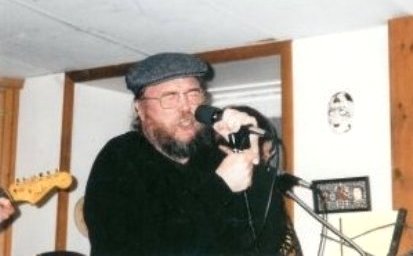
A singer as well as a poet, Jack has released one CD album of original songs, Build A Fire, as lead singer of the folk-rock duo Open Book. He sings second tenor with the Harrisburg Gay Men’s Chorus. He has been with his partner in life, David Walker, for over thirty years.
You can see more HERE