The May Special Guest Story is by Paul Levinson
Please feel free to visit Paul at: levinson.paul@gmail.com

THE HARMONY
by Paul Levinson
The old IRT train lurched out of the elevated station on the corner of Allerton Avenue and White Plains Road in the Bronx. Window panes on the Hebrew National deli rattled like a drum-roll fade-away intro to the three-way harmony we were weaving. Our singing was all encompassing, our voices our only instruments, absorbing the dust and the shudders of the train station and everything else on that late April street corner like some vortex out in space, like the hole in the center of a 45 record spinning round and around on a black turntable...
It was 1966 -- JFK was dead less than three years -- and Lenny, Dave, and I sucked in and breathed out the new world through our music. We were remnants of a last-gasp doo-wop group from the early 60s, much the rage at Bronx House and the Y's on the Concourse a few years earlier. But now we had taken up Peter, Paul, and Mary for the Five Satins. We even dared a Dylan or Phil Ochs song once in a while.
This evening, though, we labored on a old folk standard -- "The Banks of the Ohio" -- and Len and I were close to despairing that Dave, our second tenor, would ever get his part right. Still we pressed on, train station shaking and rattling and rolling, until a voice stopped us cold.
"Is that a folk song you're singing, or what?"
We turned around to see a cop. He had crept up to us on some kind of silent shoes.
"Uhm, that's right," I answered, ready for the inevitable time to break it up and take-it-home-boys lecture.
"Good harmony parts there," the cop commented. "But you were a little off on that suspended fifth." He looked at Dave.
I was too flabbergasted to speak.
"Yeah," Lenny chimed in. "We picked it up from the Mamas and Papas."
The cop shrugged. "Never heard of them. But if you like that kind of barber shop, I can show you some good parts."
"Sure," I said, by no means ready to give up my distrust of cops -- hell, I'm not too hot about them even now -- but by no means ready to say no to such an offer either. "Officer, ah ..."
"Jimmy, just call me Jimmy." He extended a big hand, and I shook it. He had jet black rock 'n' roll hair and Newcastle coal in his eyes.
*****
Harmony is like no other progression in this world. Two voices are night and day in comparison to one, and three can do things utterly unattainable by two -- chords become possible for the first time with three -- but the returns diminish sharply with the addition of the fourth voice and beyond. Still, the fourth voice makes all manner of sixth and seventh chords possible -- the crystal cool icings on the cakes of chords -- and Officer Jimmy was exquisite at them all.
I have no idea how long we were actually singing there on that corner. It felt like years. We lit the street with our music. And we must have been quite a sight as well. Three kids and a cop -- decent name for a group, in some eras -- and we attracted all manner of onlookers, more than a few truly pleased.
"Good to hear those old sounds again, right Pop?" Jimmy said to an old guy, seventy at least, who watched with rapt admiration as we finished an inspired rendition of "Pennies from Heaven." Dave never sang so well in his life, and Lenny and I were flying.
"You betcha," the gent said, "like the boyez on Simpson Street." He sounded just like my Great Uncle Abe.
Jimmy smiled oddly. "Long time since I've been by Simpson Street. You think these boys are ready?" He gestured expansively to us.
Uncle Abe shook his head. "Simpson Street's quite a responsibility. Not a decision you should make lightly."
"You're right, Pop. You know the bass on `Down by the Old Mill Stream?' We could use a little help on the low end."
Abe gave a sharp wave of his hand. "Nah -- I'm too old for the street corner now. You just sing and I'll give a listen, and then I'm gone. I've stayed too long here already."
And when we finished, he was indeed gone, maybe up the downtown side of the train station to Simpson Street, though how a man his age could have climbed those stairs so quickly I couldn't say.
I was about to ask Jimmy about Simpson Street when a cop car pulled up to the sidewalk. "Excuse me," Jimmy said, with a degree of embarrassment and irritation that surprised me. "My buddies are probably wondering what happened to me."
Jimmy's buddies got out of their car on both sides, slamming their doors shut with a flourish, swaggering on to the sidewalk. One talked volumes into Jimmy's ear and the other glared at us. Jimmy eventually came back to us, looking even more embarrassed than before.
"I've got to go back to the station now," he said. "Look, I had a great time with you guys."
"Did singing with us get you in trouble?" I asked with real concern.
Jimmy looked at the cop car and frowned. "I can take care of myself, don't worry." He pulled out his ticket pad, and scribbled something down. "Here." He handed a thin yellow piece of paper to me. "It's the address of the place on Simpson Street. But they don't keep regular hours there -- they're only open after midnight, a couple of times a month. If you go, tell them Jimmy the cop sent you -- otherwise they may not let you in."
He paused a second. I started to ask how he knew that my brain was already veering to Simpson Street, but I stopped -- it somehow felt right that his mind would be so in tune with mine, maybe it came with the harmony. "And you should go," he continued. "They've got the best harmony you'll ever hear, and you've got real talent." He said this to all three of us, but I knew he meant it for me.
I saw a door of the cop car open out of the corner of my eye. Jimmy saw it too. "All right, I've got to get out of here now. Thanks for the singing -- it was grand."
Jimmy and the cop car were gone a few seconds later.
"What time is it?" I asked Dave. He was the only one of us who carried a watch -- stuffed deep in his pocket for some reason, along with used tissues and who knows what else.
Dave fished for the watch and took a look. "It says 9:30, but that's impossible. We've been singing here for hours."
"The snot on your tissues finally got to the mechanism," Lenny laughed.
I laughed too. But my guess was that if anything had stopped Dave's watch it was the incredible harmony we had been singing with Jimmy.
*****
Ten parts girls -- or the imagined pursuit of -- and one part homework kept us from getting together again for most of the month. And when we did, our harmony wasn't so great.
"You think we should go down to Simpson Street and see what's going on there?" I asked.
"Not tonight," Lenny and Dave said, and heaped a wilted salad of excuses on me. I realized that my days with these guys were ending, and I'd have to go down to Simpson Street on my own.
Not that I was thrilled to go any place in the South Bronx myself after midnight. I mean, 1966 wasn't as bad as in later years, but even then the city was none too safe at night.
Still, I took a typically urine-tainted train down to Simpson Street a few nights later. I had no idea how to process Jimmy's remark that the place was open only a few nights a month, but I showed up at 12:45 at the address Jimmy had written on the yellow paper. It was a ground floor apartment in a building that was worse than seedy but still standing.
A nondescript guy answered the door. The fact that he was nondescript somehow made him weirder to me than if he had been outrightly peculiar.
"Uh, Jimmy the cop -- a police officer my group and I were singing with a few weeks ago -- gave me this address," I said.
"Group?" Mr. Nondescript said and peered over my shoulder. "I don't see no group."
"Right," I said, "I came here alone. Jimmy said you've got some great harmony going on here this time of night." Much as I strained, I couldn't hear any sounds within.
"Been a long time since Jimmy been here," he mumbled.
"Look, if this is the wrong time, I can come back again," I said.
"Nope, if it's right for you, then it's right for us," he said, and gestured me into the apartment.
As soon as I entered, I was blinded by the voices I heard. Not deafened -- because, whew! could I still hear -- but blinded, because the sounds packed my mind so full there was no room left for vision.
People gradually came into focus. The room was some sort of huge hall, and the people were clustered in every sort of singing group imaginable -- some, like rap groups, that I couldn't even imagine in 1966. There were doo-waps, barber-shops, madrigal harmonies, modern jazz, British rock sounds -- if I said I felt like a kid in a candy shop I'd be lying, 'cause I never cared that much for candy.
I was next to some black guys singing Drifters songs. I joined right in with a falsetto part. They liked it and we sang on.
"Sound good, don't it," the guy next to me said -- a baritone with a voice like hot roasted peanuts whose name was Elias. "You oughta stay here with us -- what we got too good to throw away."
I smiled at the compliment -- pretty much standard courtesy but still nice to hear. "How often do you guys practice?"
Elias shook his head. "We never practice -- got no need to. We're here all the time."
I nodded. I understood well the addictive tug of fine harmony -- that feeling of being close to the cosmos when a chord from your voices sounds just right. Most people who sang like this would gladly trade the flat clack of everyday life for the music of the spheres, but few us ever got the chance. We talked about it, though -- incessantly -- as if our words could somehow do the bidding of our music. But in fact the real world is ruled by other things, and we turned out to be lawyers and doctors -- far worse, if we weren't lucky -- the music fading even as we assured ourselves that we were ever holding on to it.
But the music was strong that night on Simpson Street, and I sang till I was hoarse, and when I left I hardly noticed that it was still pitch black outside, because I was too tired and happy to care.
*****
I came back night after night.
"I thought this only goes on a few nights a month," I asked the deadpan man at the door one night. This must've been well into the second or third week of my visits. I was so involved with the music that I had trouble telling minutes and months apart, let alone days and weeks.
"That's right for the first time," he said. "But for you, we're here all the time now. If that's what you want."
I couldn't say I understood what he was talking about, but it didn't matter -- only the singing did.
Harmony, you understand, by its very nature breaks the rules, providing a much greater thrill than three or four or five voices singing together should in all logic deliver. I had long been aware of this -- knew about it from the time I was a kid who first just listened and then joined in on the street corners for hours and hours. My parents and non-singing friends had all wondered what had come over me then...
So I was accustomed to strange glistening things, whenever and wherever harmony was involved. But the room on Simpson Street was stranger than I realized, because despite the night after night I spent there, no one on the outside world seemed to miss me. Not because I was wrong about how much they cared about me -- always a possibility in my case -- but because, well, I wasn't really gone too long by their reckoning. In fact, I came to realize that I was barely gone at all -- just the time that it took those swaying clanking trains to get from my place near Allerton Avenue down to Simpson Street.
I asked Mr. Nondescript about this one night. "Just a little gift we give you -- a gift of time -- don't worry, it won't last forever," was all he said in reply.
I asked Elias about it, too.
"Well, that's why I told you should stay with us," he said. "Now you know what I was talking about."
But I didn't, and Elias was too busy blowing harmony to tell me more. That's the way it was with everyone.
I kept coming back -- the singing was too good not to -- but I was bothered by this thing about Simpson Street that made no sense, and everyone there was either unwilling or unable to explain to me. I mean, I understood that harmony takes you out of this world, but the logical part of me just couldn't swallow being taken out so literally.
*****
A few nights later, I ran into Officer Jimmy as I was about to climb the two flights of the Allerton Avenue station.
"You're going to Simpson Street," he said.
I nodded.
"Without your buddies?" he asked.
"Nah, we don't sing together anymore," I said. "We tried one or two times, but there's just no comparison to--"
"I know," Jimmy said with an intense, almost envious gleam in his eyes. "Nothing in this world compares to Simpson Street. Your partner Lenny told me the same thing last week."
"Lenny's been down to Simpson Street?" I was shocked. "I've never seen him there." Why the hell hadn't he told me? Well, I guess I hadn't exactly been in frequent touch with him either in the past few weeks.
Jimmy grimaced. "What can I tell you -- it's a big room, easy to get lost in there."
I suddenly had a bright idea. "When do you get off-duty? Why don't you come with me tonight?"
"I--" an uptown express roared by and blocked out Jimmy's words. "I don't get off-duty till morning," he began again. "And besides, I can't go back there ever again. I guess you've got a right to know that."
"I don't understand," I said.
"Come on, don't play dumb with me." For the first time I noticed a little anger in Jimmy, too. "Look," he said more softly, "don't tell me you haven't noticed some of the peculiarities of the place."
"Yeah, I have," I said, "but I'm not too clear on what they add up to." I could hear my train approaching the station. So could Jimmy.
"The joys in this life aren't always free," Jimmy said. "One of these nights they'll tell you the price."
"Which is?"
"Look, you and I are really strangers, except for the harmony," Jimmy said. "I met you and your partners on a street corner. I saw you had talent, so I gave you the address. The rest is up to you now. You'll find out soon enough. I made my decision, and you'll have to make yours." Jimmy squeezed my shoulder in a good luck, older brother sort of way, and walked off.
I knew there was no point going after him. I hustled up the stairs, shoved my token in the slot, and dove into the train.
*****
The nonentity at the door had a little smile on his face this time. I guess that made him a nonentity no longer, and that in itself was disturbing. "Make sure you come see me before you leave tonight," he said with a cloying relish, and strode away.
I kept away from the Drifters this evening until the end -- saving the best for last. I sang with two modern harmony groups, a Beatles-type group, a folk group, and even a spectacular Shirelles-type group. I kept my ears and eyes tuned for Lenny -- a waste of time -- and then I ambled over to the guys who sounded better than the Drifters. We did "Up on the Roof," "Under the Boardwalk," "On Broadway," and a rendition of "Save the Last Dance for Me" that pulled my mind so wide open that our five part harmony is still bouncing around inside somewhere...
"You stay with us." Elias put his arm around my shoulder. "Like I told you the very first time you came here, this kind of sound is too good to throw away. You remember that when you talk with the man at the door."
The man at the door was positively leering at me now. He beckoned me over with his index finger.
"You've had a good time here the past few weeks?" he asked.
"The time of my life," I said, and thought that the weeks felt like years at least.
"The boys have a high opinion of you." He looked over in Elias' direction. "Everyone here does. They want you to stay."
I didn't care for the way he seemed to separate himself from the others and their good opinion of me, but I had a more serious concern at the moment. "Why all the sudden talk about staying?" I realized as soon as the words were out of my mouth that the talk wasn't all that sudden.
"You'd like to leave, take our gift of time, and come back tomorrow -- no fuss, no bother, just like you've been doing so far, right?"
"Right," I said. "Is that some sort of problem?"
"I'm afraid so. You have a little decision facing you. You can leave now, and come back whenever you please. But you may want to think about coming back here, because if you do, if you show up here even one more time, you'll be obliged to stay forever. Your free pass is over tonight."
"What are you talking about? What the hell kind of choice is that?" I asked.
He laughed. Have you ever seen a nondescript person laugh? It can be frightening. What he said was even worse. "You can curse as much as you like, but it won't change the facts. I'll give you Elias' full name, and the names of everyone here you've sang with. Check them out for yourself. You'll find that they have all been long or short dead on the outside. That's the price you pay for staying with us -- that's the price of this magic." He shoved a piece a paper in my hand.
"You call what you're talking about magic?" I asked. I put the paper in my pocket without thinking, right next to the paper Jimmy had given me. I always carried it with me.
"You know exactly what I mean," he said. "You feel the harmony -- you know what it does to you. A blind man could see how it affects you. You won't have a feeling like that again the rest of your life. Sure, you'll have your successes and satisfactions. You'll have the big ones like a wife and kids and a good profession. You'll have the little ones like getting the last copy of a hot movie in the video store. But you'll never have a feeling like this."
I hadn't the vaguest idea what a video store was, but I knew what he meant anyway. I was amazed at how articulate the guy had suddenly become -- like this speech he was giving me was his command performance, his reason for being here. "You're not the only harmony parlor around," I finally managed, "I can always find other people to sing with."
Again, that laugh. "Come, come, you know and I know that you'll never find another session like this."
"We'll see about that." I stalked out of the door.
"Remember," he called after me. "Think hard before you come here again -- because next time is for keeps."
The sky, which an instant before was black-as-your-hat, suddenly burst into full daylight. And along with the light came a ragged chorus of car horns and midday noises. "The sound of reality ...," I heard him say. But when I turned around and looked in his direction, the door he had just opened was long since shut and bolted.
*****
Well, I checked out the names on the list, Elias' and every single one of them. And it was just as he said. They were all dead. Elias had drowned three years before in some stunt off the Hudson River -- his body had never been recovered. It was the same with the rest. By the time I was finished, I knew more about the heartbreak of families than I ever needed to know.
Or maybe I did need to know; maybe Mr. Nondescript wanted me to know so I could make an informed decision.
And if that was the case, I guess it worked. My parents got on my nerves plenty in those days, but the thought of their going through what Elias' family had suffered was way too awful for me to pursue. I couldn't do that to my folks. Besides, I've always been a bit of a coward at heart, avoiding risks most of the time. I doubt I would've taken a chance on actually ending my non-harmony life in any case. As much as I loved the harmony. I was only seventeen.
But yeah, I went down there more than once after that last night -- never had the courage to even knock on the door, though. I just stared from across the street. Sometimes I'd stare for hours. And those times, the hours counted. One time I saw two girls knock on the door, and the nonentity let them in. I stared hard inside before the door closed and I thought I saw someone who looked like Uncle Abe inside.
I saw Lenny on campus a few times after that, too. At first he denied that he'd ever been to Simpson Street, and then that there was anything unusual about the place. Why? I don't know -- I guess he felt uncomfortable talking about his encounter with perfection. I guess most people would. But then one night he opened up. He told me how he'd sang with a lot of great groups in the Simpson Street apartment -- many the same as mine -- but how he found one group that was extraordinary beyond belief, a combination of the Skyliners, Four Seasons, and the Beach Boys. When he added his part to those singers, Lenny said, he felt complete in a way he had never experienced before. Interesting that I never heard anyone at Simpson Street that sounded the way Lenny described. But I knew just what he meant, because I felt the same way about Elias' group. One man's Seasons is another man's Drifters.
"I wonder why there aren't any famous dead rock 'n' roll stars in there," I asked Lenny, "like Ritchie Valens or Johnny Ace."
"That's not what the place is about," Lenny answered. "The stars went a different way -- Simpson Street's about beauty not fame." And I realized his understanding of the place was clearer than mine.
*****
I never saw Lenny after that. The Spring term was over and he was off with his folks to his aunt's house near the Hamptons. He loved the ocean -- said it made him feel like an East Coast beachboy. He must have walked on those sands alone at night, hearing the waves crashing like the trains moving out of the station, longing with a terrible hunger for those high tenor riffs on Simpson Street.
I can't say I was really surprised when I heard what happened -- a part of me was crushed and confused, cut up in a texture of harsh pain and a keen reed of insane jealousy -- but I wasn't really surprised. I knew the depth of Lenny's need. Dave said Len went out in a little boat one late afternoon, and must've caught the tide at the wrong time. It carried him too far out. He never returned. Dave had no idea what had really happened, but I knew.
I called Lenny's parents and tried to tell them, but my throat was stuck. So I stifled my tears and told them I'd never forget Lenny and that was all I said. But I knew where he was. I went down to Simpson Street one more time and kept a vigil through the night. Five maybe six times I walked towards that door. Each time I found that I couldn't move; each time the paralysis set in sooner.
Finally, I knew there was no point in coming back.
I love you Lenny, I sure hope you're happy in there, I sure hope you think of me once in a while when you break into falsetto. I'm sorry I wasn't a better friend to you when I had the chance.
*****
My life has had -- as that damned doorman predicted -- its successes and satisfactions. I've had much happiness: Debra and the kids have brought me a fulfillment in a dimension that's in many ways far beyond music. And I've found ways of channeling my creative juices. Even made a few recordings at the end of the 60s, though nothing of that singing holds even a flicker of a candle to the harmony I helped make on Simpson Street.
Oh yeah, I even ran into Jimmy again a few years ago up at the Cross County Shopping Center just north of the city line. His black hair was shot through with grey, and he had been retired from the force for a few years. He told me his wife had died of cancer, they had no kids, and he was thinking of going down to Simpson Street for the big plunge.
"Is that building even still in existence?" I asked.
"Sure," he said, "of course it is. I know it is. It's always there for you if want it. That's part of the deal."
If we'd had a third voice -- hell, I'd have even settled for Dave, whatever he became -- we'd have sung some harmony right there at the mall. But seeing as there were only two of us, and you can't really do much with two, we let it pass. We wished each other well.
I still carry the address on the yellow piece of paper Jimmy gave me in my wallet. Now it's yellow not only because that was its original color, but because of its age.
I take the paper out every once in a while, look at that address, and think about it.
But I harmonize with the radio not real people these days. It's safer that way.
*****
I stopped by Blockbuster Video at the mall last night. The Drifters were playing on the speakers, and I added my usual harmony part under my breath. A bunch of kids were standing around outside -- I could see them through the window -- and I knew, without hearing a sound, just what they were doing. I could tell by their stance. First group of singers I'd seen on the street in twenty years. Maybe that kind of singing is starting up again. The mall's not as good as a street corner under a train, but it has its appeal.
I paid for my movie and walked outside. The kids weren't bad. They saw me listening. I smiled at them.
"That's pretty good harmony," I moved closer and said after they'd polished off a song with a sparkling major sixth.
"Thanks," said a tall guy with a baseball cap pulled backwards.
I could feel how easy it would be to do my part now. To do Jimmy's old routine. I knew the whole arrangement -- my lines and their lines -- from start to almost finish.
"You look like you sing sometimes yourself," a girl with a voice of murmuring woodwind said, "why don't you join us on our next song?"
Sure, sing with them, impress them with some clever chords, give them a prelude of what could be ... I had to resist this, because I knew exactly where it would lead.
"I'd really like to," I looked at my watch, "but I'm late already."
I reached in my pocket for the car keys.
But I came up with the yellow piece of paper.
[First published as a short story in Xanadu 3, edited by Jane Yolen, Tor Books, 1995]
[Copyright 1995 by Paul Levinson.]
Paul Levinson, PhD, is Professor of Communication and Media Studies at Fordham University in New York City. His eight nonfiction books, including The Soft Edge (1997), Digital McLuhan (1999), Realspace (2003), and Cellphone (2004), have been the subject of major articles in the New York Times, Wired, The Christian Science Monitor, and have been translated into ten languages. The book New New Media, exploring blogging, Twitter, YouTube and other “new new” modes of communication, was published by Penguin Academics in September 2009.
Paul's science fiction novels include The Silk Code (1999, winner of the Locus Award for Best First Novel), Borrowed Tides (2001), The Consciousness Plague (2002), The Pixel Eye (2003), and The Plot To Save Socrates (2006). His short stories have been nominated for Nebula, Hugo, Edgar, and Sturgeon Awards.
Paul Levinson appears on "The O'Reilly Factor" (Fox News), "The CBS Evening News," "NewsHour with Jim Lehrer" (PBS), "Nightline" (ABC), and numerous national and international TV and radio programs. He reviews the best of television in his InfiniteRegress.tv blog, and was listed in The Chronicle of Higher Education's "Top 10 Academic Twitterers" in 2009.
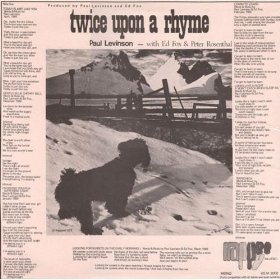
"The Harmony" is based in part on Paul Levinson's work as a singer-songwrtier in 1960s and early 1970s. His 1972 album Twice Upon a Rhyme is now available for sale on iTunes and Amazon.