
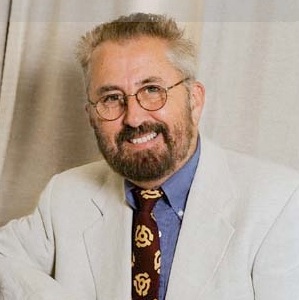
The March Featured Story is by Michael C. Keith
Please feel free to email Michael at: mckradio@comcast.net
LAST DREAM
by Michael C. Keith
For in that sleep of death what dreams may come
-- William Shakespeare
In her last dream, Lacy Carlisle rode her beloved horse across an endless golden pasture toward a brilliant sunset. Her husband of fifty years kept apace beside her on his own mount. The scene consoled her bereaved husband and family and gave them a comforting sense that she had left her long life happy and at peace.
It was exactly what Last Dream Incorporated intended and its success had made its creator rich and famous and, in many sectors, infamous. That he had discovered a way to procure the last images of those recently expired was considered a great scientific achievement, but LDI’s sale of the videos to the survivors of the deceased was condemned by a wide assortment of religious and civic groups.
“We’re a for profit company. What the hell do they expect? This cost the company millions and they want us to give it away to make everybody happy. Well, we do that, too, don’t we? We make people goddamn happy,” grumbled LDI’s Chairman, Martin Bellman, about the mounting criticism.
“Totally,” echoed Sal Lamont, LDI’s second in command.
“I spent years trying to prove my theory about post-mortem brain activity,” continued Bellman. “It wasn’t easy, you know that, but I finally came up with the Capture Technique, and it’s given countless families tremendous comfort in their time of grief.
“You bet it has, Marty. Ignore all the naysayers. Don’t forget that these same people went postal when Second Image cloned a human. This will blow over, too,” assured Lamont.
“After all, every last dream we’ve provided has been upbeat and life-affirming in nature. That’s how they’ve all come out. Amazing, isn’t it . . . all happy little moments before the big darkness. Jesus, you’d think everyone would be pleased about that. Look at the positive impact it’s had on dying. People are no longer so damn disheartened by it,” observed Bellman.
“Maybe the God Guys don’t like the competition,” added Lamont.
“Why? We’re not offering life everlasting, just a little relief for those left behind,” said Bellman. He turned to gaze through the tinted glass window of his fourteenth floor office at the woods surrounding LDI’s headquarters in rural, Pennsylvania.
The controversy intensified when a television reality show debuted, which featured the final reveries of the newly dead. LDI tried to distanced itself from the broadcast, although it was public knowledge that the company was the source of its program content. Indeed, it was the only possible source. No other enterprise had managed to duplicate LDI’s formidable achievement, although several continued to try. They, too, wanted to get in on the enormous profits generated by the break-through technique for capturing afterlife images.
*****
Two weeks following the death of her husband, Pamela Saunders received the digital copy of his last dream. Although it had cost several thousand dollars, she felt it would be worth every penny to witness her husband’s final thoughts. Upon receiving the package from LDI, she arranged a day to screen it for her family. Although, tempted to watch it right away, she wanted to experience the precious moment with her children and close friends.
When the much-anticipated special day arrived, everyone assembled in Pamela’s living room. Each attendee brought a food dish to be added to a buffet table adjacent to a 52-inch 3D television. After the customary greetings and small talk, Pamela asked the assemblage to be seated. She then handed the LDI disk to her son to insert into the monitor’s player.
“Okay everyone, this is the moment we’ve been waiting for. Are you ready? I know I am.”
“Yes,” replied the group with subdued enthusiasm.
Both daughters of the deceased already had tears welling up in their eyes as they clutched each other’s hand.
“Here goes,” said Paul Saunders, Jr., taking a deep breath before pressing the start button.
The former husband, father, and friend instantly appeared on the wide screen, causing a round of sniffles and sighs. The elder Saunders stood next to his wife on the edge of butte overlooking a vast expanse of desert. The smile on his face slowly became a hard frown.
“You’ve been the bane of my existence,” he said to his wife, who looked back at him impassively as if she could care less about what he said. “Everything I’ve ever done has been criticized by you. I could never live up to your expectations. All you did was gripe at me. You found fault in everything I did, and I’ve had it.”
Pamela watched the screen stunned and embarrassed by her late husband’s litany of grievances, and what he did next thoroughly shocked and horrified her and everyone else in the room.
“I’ve been wanting to do this forever,” he blurted pushing his wife off the high ridge.
“Stop! Stop it!” exclaimed Pamela. “This is a fraud . . . a complete fabrication. It’s not Marty’s last dream. Someone changed it.”
Everyone agreed and her son, a lawyer, advised suing LDI for the emotional distress the recording had caused.
“Why would they do this? Who would do such a thing?” sobbed Pamela as her children and friends attempted to console her. “Sure we had our differences, some big ones, in fact, but nothing that would make him act like that.”
*****
Later that day, LDI got a call from the surviving Paul Saunders, who informed Bellman and Lamont of what had occurred. They were dumbfounded by his claim and quickly shifted into damage control. Because of the huge volume of last dream recordings the company was shipping, it had stopped reviewing each one. This seemed okay since all of the recordings they had seen were completely benign. Each was as a virtual duplicate of the others in terms of their joyfulness. To say the least, LDI’s top executives were perplexed by Saunders’s claim and immediately uploaded the recording from their archives.
To their extreme chagrin, everything Saunders had reported was true, and Bellman and Lamont were flabbergasted.
“This has never happened before!” cried Bellman throwing his hands into the air.
“We’d better check everything in the archives. This can’t be the only one,” observed Lamont.
The search revealed several similar recordings, but fortunately for LDI none of them had been purchased.
“I want us to review every goddamn capture we get before we offer any for sale, Sal. This could ruin us. Imagine the pleasure it would give our detractors. They’d have a frigging field day with this. Give the Saunders whatever the hell they want to keep quiet. Get the rights back to their LD, too.”
It took some considerable negotiating with the Saunders for them to agree to return the recording and remain quiet, but Bellman felt the $10 million pay off was worth it.
*****
During the two years that followed, business remained good for LDI, although it continued to encounter the occasional rogue recording. The company developed a new policy of claiming there had been no retrievable images to the heirs of those with errant dreams. The other concern at LDI was the declining ratings of the reality show that had kept sales brisk. With the audience erosion of “Last Dreams,” LDI detected a drop in the number of units it had been selling. The viewing and buying public seemed bored with the familiar little narratives. “There’s only so much saccharine the audience can take,” declared “People On-Line” and “Entertainment Forever” echoed similar sentiments.
After its third year, “Last Dream” was canceled by the Fox Reality Channel because of dismal numbers, but by then Bellman and Lamont had conceived of another idea to generate sales, and it excited network programmers. Their concept was based on the current wisdom that the television audience wanted shows that titillated and shocked. This had recently been corroborated by the success of shows that focused on the puerility of human behavior; shows such as “The Biggest Cheaters” and “Who Do You Hate?”
To launch the show, LDI had to secure permission from relatives of the departed to air the once-suppressed dream segments. What had been thought to be potentially toxic by the company was now perceived as a probable gold mine. It shocked many families to learn their loved ones did, indeed, have a final dream, and further shocked and often mortified them when they were informed of the bleak nature of its content. Despite this, nearly all agreed to sign over the rights when offered enormous sums of money.
In short order LDI had enough inventory to launch its new reality show--“Ultimate Nightmares.” It was an astounding hit, something the American audience clearly craved, and it lasted until once again satiated viewers sought something more sensational and outrageous. Among the pilots that tested most favorably was one that showcased live homicides, whose subjects were taken from the ranks of the homeless. The idea of watching the dreams of the dead could not compete with those featuring the agony and horror of those about to die.
Michael C. Keith is an award winning scholar and professor of communication at Boston College. He is the author of over twenty books (including a critically acclaimed memoir, The Next Better Place (Algonquin Books, 2003) and dozens of articles and short stories. He recently co-edited a book on the legendary radio writer Norman Corwin titled One World Flight (Continuum Books, 2009) and authored a young adult novel Life is Falling Sideways (Parlance, 2009).